01Paint and powder coating
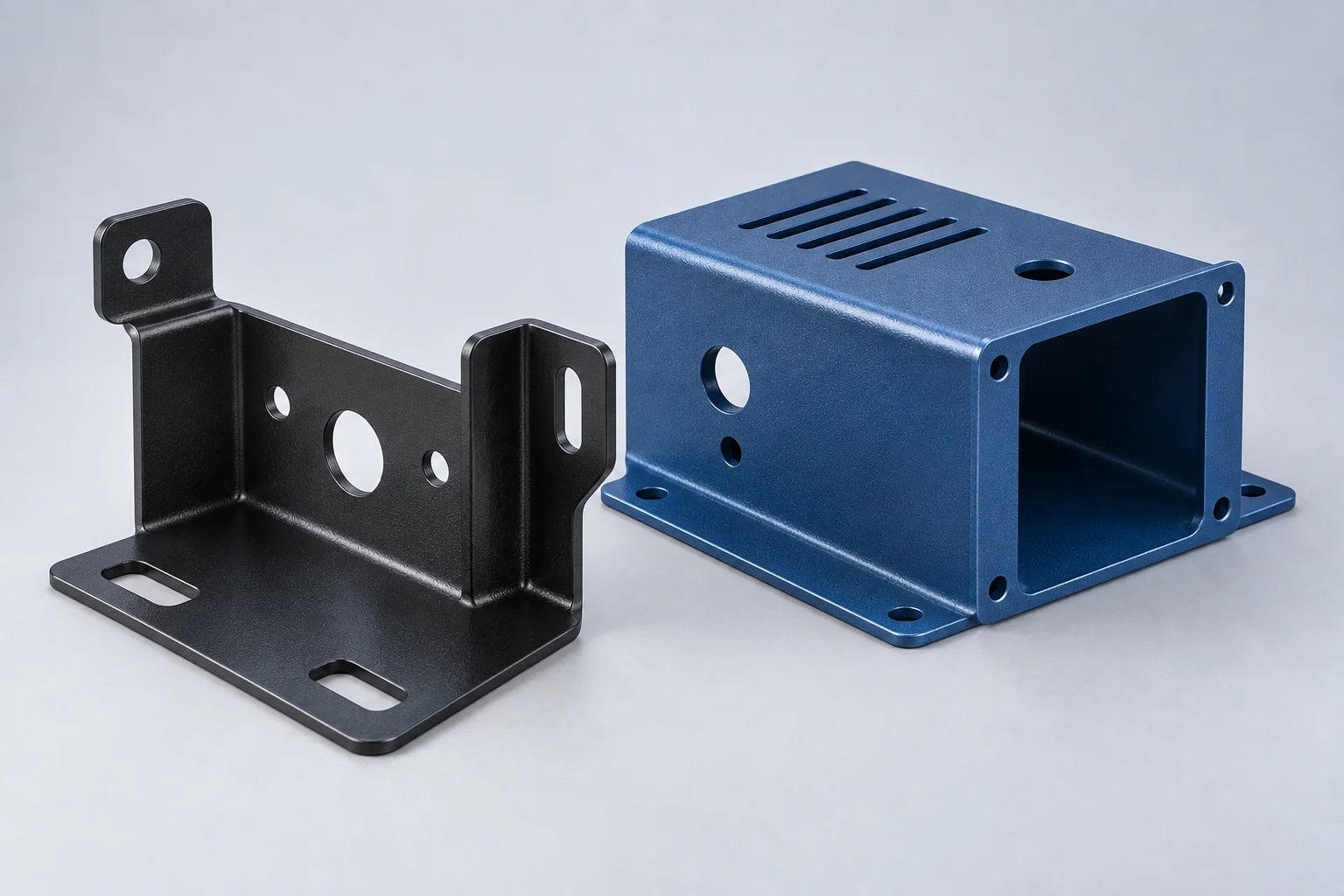
Liquid paint or cured polymer powder forms a decorative or protective film on compatible, properly prepared parts.
- Advantages
- Supports specified color and surface coverage; results depend on the system, pretreatment, film build, cure and exposure.
- Materials
- Suitable steel, iron and aluminum; galvanized surfaces need an agreed compatible preparation and coating system.
- Typical parts
- Housings, covers, guards, brackets and equipment frames.
- Choose when
- A specified colored or continuous film fits the environment, geometry, cure limits and functional surfaces.
02Zinc and zinc-nickel plating
Electroplating deposits zinc or a zinc-nickel alloy on steel parts. Zinc-nickel plating can provide specified corrosion protection and is distinct from zinc-flake coatings and hot-dip galvanizing.
- Advantages
- Provides a specified zinc or zinc-nickel metallic finish for corrosion protection.
- Materials
- Steel parts, including fasteners; select pretreatment and post-treatment for the substrate and service.
- Typical parts
- Steel fasteners, brackets and small hardware.
- Choose when
- A plated finish is required and coating thickness, thread fit, friction and hydrogen-embrittlement controls for high-strength steel are addressed.
03Anodizing
Anodizing grows an aluminum-oxide layer from a suitable aluminum-alloy surface; alloy and temper affect appearance and response.
- Advantages
- Can provide a specified oxide finish with appearance and surface characteristics suited to the selected alloy and process.
- Materials
- Suitable aluminum alloys; high-silicon casting alloys may have a different or less uniform appearance.
- Typical parts
- Aluminum housings, covers, brackets and machined components.
- Choose when
- The alloy, appearance, dimensions, sealing and service requirements fit the selected anodizing process.
04Stainless passivation
Chemical treatment removes surface contamination such as free iron and supports formation of the passive film on a clean stainless surface; it deposits no separate coating.
- Advantages
- Helps restore a chemically clean stainless surface and support its corrosion-resistant passive film when specified.
- Materials
- Stainless steel only; treatment and acceptance tests depend on the specified grade and requirements.
- Typical parts
- Stainless fasteners, machined hardware and components after fabrication or machining.
- Choose when
- The drawing or service requirement calls for passivating stainless; select a grade suited to the environment.
05Preparation and masking
Cleaning, descaling, blasting, alloy-specific activation and masking are selected for the chosen finish and functional surfaces.
- Advantages
- Supports adhesion and repeatable appearance while protecting threads, bores, sealing faces and other specified interfaces.
- Materials
- Preparation is selected for the exact substrate and finish; one pretreatment is not assumed to suit every metal.
- Typical parts
- Parts with threads, close fits, electrical contacts, sealing surfaces or selective-finish zones.
- Choose when
- Surface condition, adhesion, dimensional fit or coverage of selected areas affects function or acceptance.
06GEOMET coating
GEOMET is a non-electrolytic zinc-aluminum flake coating for ferrous parts, selected to meet corrosion and friction requirements.
- Advantages
- Provides corrosion protection; compatible topcoats can be selected to meet specified friction and torque requirements.
- Materials
- Iron or steel parts, including fasteners and brackets.
- Typical parts
- Fasteners, brackets and small hardware.
- Choose when
- A non-electrolytic zinc-flake finish is specified for the part’s corrosion and friction requirements.
07PFA coating
PFA (perfluoroalkoxy) coating is a fluoropolymer finish used for chemical resistance, nonstick release and electrical insulation.
- Advantages
- Can provide a nonstick surface, chemical resistance and electrical insulation.
- Materials
- Metal parts compatible with the specified coating system and cure.
- Typical parts
- Metal valves, pump components and parts exposed to chemical media.
- Choose when
- A fluoropolymer surface is specified for chemical exposure, release or insulation requirements.
08KTL coating
KTL (cathodic electrocoating, or e-coat) deposits liquid paint onto electrically conductive metal parts, then oven-cures the film.
- Advantages
- Supports corrosion-protection primer coverage on complex shapes and can be paired with a compatible topcoat.
- Materials
- Electrically conductive metal parts suited to the pretreatment and coating system.
- Typical parts
- Steel brackets, housings and fabricated components with complex geometry.
- Choose when
- A specified e-coat primer route suits the part and production needs.
09Hot-dip galvanizing
Hot-dip galvanizing immerses prepared iron or steel parts in molten zinc to form a metallurgically bonded zinc coating.
- Advantages
- Provides a durable zinc finish for outdoor structural exposure and robust hardware.
- Materials
- Iron and steel parts; not a standard finish for aluminum.
- Typical parts
- Outdoor structures, brackets and durable steel hardware.
- Choose when
- Part geometry allows zinc coverage, venting and drainage, and the coating thickness fits required clearances.